

- Tel: +8613968757939
- Fax: +86-577-65041537
- Email: susan@wintopauto.com
- Add: Ruihong Garden, Tangxia Town, Ruian City, Zhejiang, China
What is VALVE
When it comes to controlling the flow of liquids or gases in various industries, valves play a crucial role. A valve is a mechanical device designed to regulate, direct, or control the flow of fluids (liquids, gases, or even slurries) by opening, closing, or partially obstructing passages. Valves are essential components in a wide range of applications, ensuring efficient and precise management of fluid movement.
Function: Relay valves are responsible for controlling the air pressure in the brake system of automobiles. They receive air pressure from the brake pedal and distribute it to the brake chambers of the wheels.
Durability: Relay valves are designed to withstand high levels of pressure and constant use. They are made from durable materials and are built to last for a long time.
Compatibility: Relay valves are available in different sizes and configurations, making them compatible with various types of brake systems used in automobiles.
Safety: Relay valves are crucial for ensuring the safety of passengers and drivers in automobiles. They help control the brake pressure and prevent accidents from occurring.
Maintenance: Relay valves require minimal maintenance and are easy to replace if they become damaged or worn out.
Efficiency: Relay valves are designed to operate efficiently and quickly respond to changes in air pressure, ensuring that the brake system of the automobile functions correctly.
Relay valves used in automobiles are durable, compatible with different brake systems, crucial for safety, require minimal maintenance, and operate efficiently.
-
 Add to Inquiry
 -
 Add to Inquiry
 -
 Add to Inquiry
 -
 Add to Inquiry
 -
 Add to Inquiry
 -
 Add to Inquiry
 -
 Add to Inquiry
 -
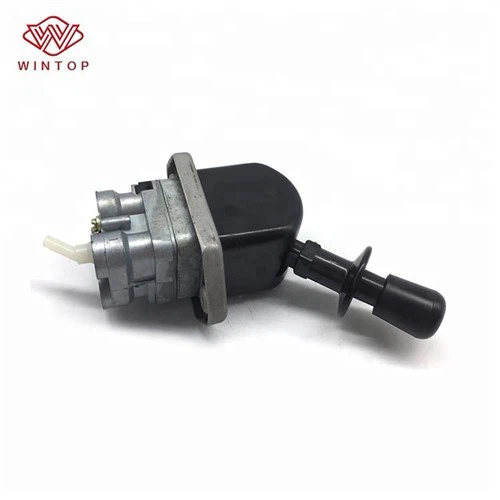 Add to Inquiry
 -
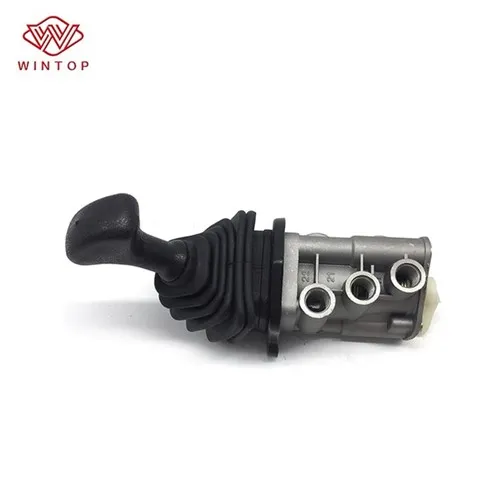 Add to Inquiry
 -
 Add to Inquiry
 -
 Add to Inquiry
 -
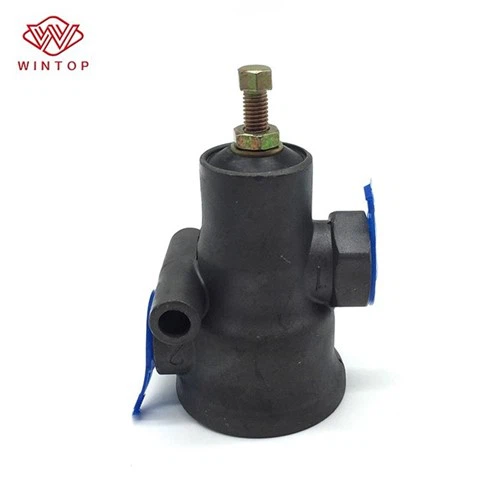 Add to Inquiry
Why Choose us
Products Quality
We have the reliable cooperation factories, and our factory is ISO9000/TS16949 quality management system certified.
Good Reputation
We have a good reputation with high quality, reasonable price and great service in the world.
Sales Network
Our range of products and services is continuously expanding to ensure compliance with customers' requirements.
Complete Product Range
We offer over 5,000 kinds of products, including chassis parts, suspension parts, Filters, Brakes, Pumps, cooling system, air condition system, alternator
Types of Valve

Service brake relay valve
With a service brake relay valve installed, the hose that connects to the primary delivery-port output of the foot-valve becomes a control-line (i.e., The air from the foot-valve “dead ends” at the relay valve's control-port.). Only low-volume air-signals are required to travel back and forth between the foot-valve's delivery port and the relay valve's control port; therefore, the air-volume supplied by the delivery port is now only a tiny-fraction of what otherwise would have been required had the relay valve not been installed. This reduces the delay between the application of the front and rear brakes to only a fraction of a second. When the driver depresses the brake pedal, a small amount of air momentarily opens the relay valve's supply port, which then directs air from the remote air-supply directly to the rear service brake chambers, and quickly applies the rear service brakes. The pressure delivered to the service brake chambers in this manner will equal the control-pressure delivered by the foot-valve to the relay valve. When the driver partially or fully releases the brake pedal, the control-pressure delivered by the foot-valve decreases; this causes the relay valve's supply port to close, and its exhaust port to momentarily open, thus preventing a pneumatic short-circuit from occurring while the air exhausts from all rear service brake chambers.
In order to control the trailer service brakes, the merged outputs (i.e., merged via 2 two-way check valves connected in-series to give three inputs) of the foot-valve and trailer-hand-valve (if applicable) are directed through the tractor-protection valve, and onward towards the trailer relay valve via the blue service line. In tractors that are not equipped with a trailer hand valve, only the merged outputs of the foot-valve (i.e., via a single two-way check valve) are directed towards the trailer relay valve; however, the fact that the foot-valve's delivery-port outputs are still merged enables the trailer's service brakes to still be controlled even if there is failure within one braking circuit of the tractor.

Spring brake relay valve
A spring brake relay valve works on the same principle as the service brake relay valve, although it has the opposite effect. This type of relay valve responds to a major drop in pressure at its control-port by opening its exhaust port, which causes the air from each spring brake chamber under its control to remotely exhaust, thus applying the spring brakes much-more-quickly than would otherwise be possible if the air were required to discharge via the yellow parking-control valve on the dashboard. In a dual-circuit air brake system, air from both the primary and secondary reservoirs is fed into the supply-port of the parking-control valve, as well as the supply-port of this relay valve; it is merged via yet another two-way check valve. The delivery-port output of the parking-control valve connects to the control-port of this relay valve; this enables the spring brakes to be controlled via this valve. The merged air from the parking-control valve prevents air-loss from only one braking circuit from causing the spring brakes to automatically apply. This gives the driver more control, and prevents the vehicle from grinding to a halt in an unsafe location. However, with this increased control, comes increased responsibility on the part of the driver: If air is lost from the primary circuit alone, the spring brakes must be manually applied by the driver via the parking-control valve; otherwise, the front service brakes may not be enough to stop the vehicle safely in an emergency—especially if the vehicle is heavily loaded, and/or traveling at a high-speed. In fact, the driver's failure to manually apply the spring brakes in this situation could lead to catastrophic failure of the front brakes due to overheating, since it could cause the front service brakes to exceed their design-limit for energy absorption.
The air inlet of the relay valve is connected to the air reservoir, and the air outlet is connected to the brake air chamber. When the brake pedal is depressed, the output air pressure of the brake valve is used as the control pressure input of the relay valve. Under the control pressure, the intake valve is pushed open, so that compressed air enters the brake air chamber directly through the intake port from the air reservoir without flowing through the brake valve. This greatly shortens the inflation pipeline of the brake air chamber and accelerates the inflation process of the air chamber. Therefore, the relay valve is also called an acceleration valve.
The relay valve generally adopts a differential relay valve to prevent simultaneous operation of the driving and parking systems, as well as overlapping forces in the combined spring brake cylinder and spring brake chamber, thereby avoiding overloading of mechanical transmission components that can rapidly charge and exhaust the spring brake cylinder. However, there may be air leakage, which is generally caused by the lax sealing of the intake or exhaust valves, and this is caused by damage to the sealing elements or the presence of impurities and foreign matters. Disassembly and cleaning or replacement of the sealing elements can solve the problem.
What Are The Primary Functions Of The Air Brake Relay Valve
The air brake relay valve is a critical component in air brake systems, playing a key role in ensuring efficient and safe operation of commercial vehicles. This valve serves as an intermediary between the brake pedal and the brake chambers, controlling the air pressure and flow to apply and release the brakes. With its precise functionality, reliability, and safety features, the air brake relay valve is an indispensable component in the braking systems of trucks, buses, trailers, and other heavy-duty vehicles.
One of the primary functions of the air brake relay valve is to relay the signal from the brake pedal to the brake chambers. When the driver applies pressure to the brake pedal, the relay valve responds by regulating the air pressure and directing it to the appropriate brake chambers. This action causes the brake chambers to expand, applying the brakes and generating the necessary stopping force. The relay valve ensures that the brake application is synchronized and evenly distributed among the vehicle's axles, promoting balanced braking performance and stability.
The air brake relay valve also facilitates the release of the brakes. When the driver releases the brake pedal, the relay valve exhausts the air pressure from the brake chambers, allowing the brakes to disengage and the vehicle to resume motion. This quick and controlled release of the brakes is essential for smooth and efficient operation, particularly during frequent start-stop situations, such as in city driving or heavy traffic conditions.
Reliability is a crucial factor when it comes to the air brake relay valve. It must be able to consistently and accurately respond to the driver's inputs, ensuring precise control of the braking system. The relay valve is engineered to withstand high pressures and heavy-duty applications, ensuring durability and long-term performance. It is constructed with robust materials, such as cast iron or aluminum alloy, to withstand the demanding conditions encountered in commercial vehicles.
Safety is of utmost importance in air brake systems, and the air brake relay valve incorporates several safety features. One of these features is the quick release function, which allows for rapid brake release when needed, reducing stopping distances and improving overall vehicle safety. The relay valve also includes an exhaust port that provides a path for excess air pressure to escape, preventing over-pressurization of the brake system and potential brake lock-up. Additionally, some relay valves have built-in check valves that prevent air from flowing back into the brake chambers, maintaining the integrity of the braking system.
5 Tips For Selecting The Right Valve
Check for Special Valves Requirements
Before you buy a valve, ensure that it will work the way you expect. Ask yourself how long the valve takes to respond and how much pressure is required to open it. You should also consider the normally open vs normally closed valves because each serves a different purpose.
An appropriate choice can improve the reliability of the valve. What determines the choice is whether the valve is usually more closed or open during the normal system operation.
How to Select the Right Valve: Materials of Construction
Valves are made from different materials with different qualities like strength and chemical resistance. So you need to know the strength and chemical compatibility of your valve of choice. A valve must not react with the liquids or gases flowing through it.
If you are dealing with corrosive or harsh chemicals then plastic valves can be the best option.
Valve Type and Size
Valves vary in types and sizes and this is what determines the type of use they can be put into. Valves can be used to adjust fluid/gas flow, mix flow, divert flow, or shut off flow. They can also be used for backflow prevention and for releasing pressure. The function of a valve determines which valve type to choose.
Performance Requirements
A valve is expected to work under different conditions of temperature and pressure. A good valve should continue to perform well under the lowest and the highest temperatures and pressures of the system.
Metal valves are better than plastic valves in highly pressurized systems especially if the operating temperatures are also high. This is because metals are stronger than plastics.
Maintenance
Tips for selecting the right valve can't be complete without considering maintenance. Valves do wear out with time, so you need to factor in maintenance cost in your choice for a valve. This is important for both application stability and valve reliability. Working with a faulty valve is very dangerous as it may lead to fluid or gas leakages.
You should also consider valve connection type when choosing because this affects the speed and ease of replacement or repair. Each connection type (Luer, push-in, barbed, threaded, etc) has its advantages and disadvantages.
Our Factory
RUIAN WINTOP AUTO PARTS CO., LTD is the most professional & reliable supplier in truck spare parts for VOLVO, MAN, SCANIA, MERCEDES BENZ, DAF, RENAULT, IVECO etc. We offer over 5,000 kinds of products, including chassis parts, suspension parts, Filters, Brakes, Pumps, cooling system, air condition system, alternator & starter system, ignition system, exhaust system and body parts for heavy-duty trucks and trailers.
We have a good reputation with high quality, reasonable price and great service in the world. We have the reliable cooperation factories, and our factory is ISO9000/TS16949 quality management system certified.
We aspire to meet the demands of truck parts users globally. Our range of products and services is continuously expanding to ensure compliance with customers' requirements.
WINTOP welcome our potential customers for future business relationships and achieving mutual success!

Asked Questions
Q: Why do commercial trucks use relay valves on the primary circuit?
Q: Which line activates the relay valve?
Q: What are three functions of the relay emergency valve?
It relays air from the trailer reservoir -> trailer brake chambers during a brake application. ...
It directs trailer reservoir air -> trailer brakes, causing an emergency application of the brakes.
Q: What is the difference between r12 and r14 relay valves?
Q: What do relay valves do in CDL?
Q: What is the primary function of a relay valve?
Q: How does a truck relay valve work?
Q: What is the crack pressure of a relay valve?
Q: What is the function of the C2 relay valve?
Q: What does an SR1 valve do?
Q: What is the purpose of the relay emergency valve?
Q: Where is the relay valve located?
Q: What is an emergency relay valve?
Q: How does a relay valve work?
Q: What is another name for relay valve?
Q: What do relay valves do in CDL?
Q: What is the primary function of a relay valve?
Q: What is a relay emergency valve?
Q: What is the crack pressure of a relay valve?
Q: Where is the relay valve located?
As one of the leading valve manufacturers in China, we warmly welcome you to buy or wholesale cheap valve in stock here from our factory. All products made in China are with high quality and competitive price.
