

- Tel: +8613968757939
- Fax: +86-577-65041537
- Email: susan@wintopauto.com
- Add: Ruihong Garden, Tangxia Town, Ruian City, Zhejiang, China
What is Solenoid Valve
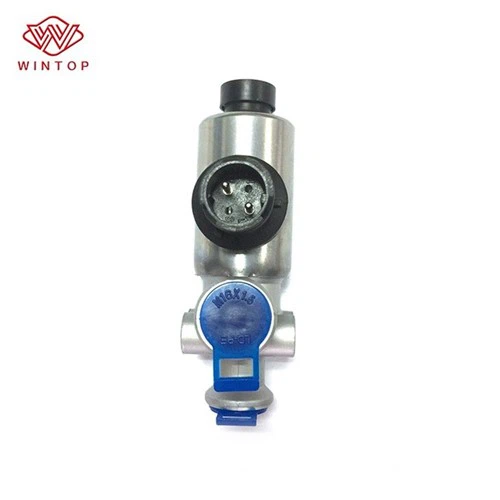
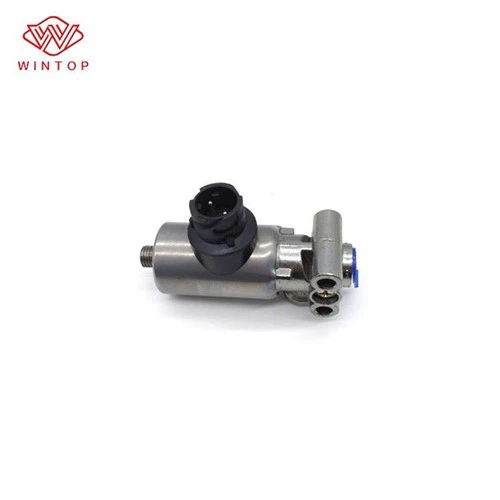
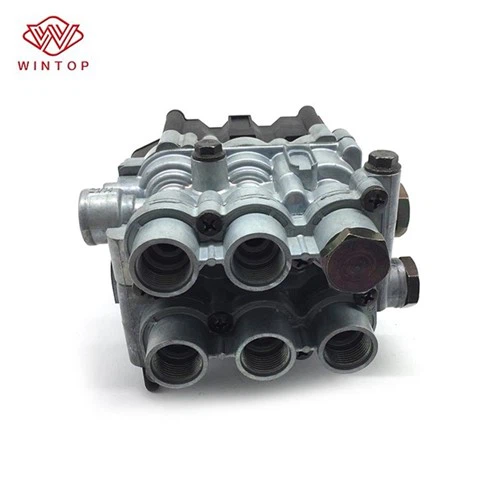
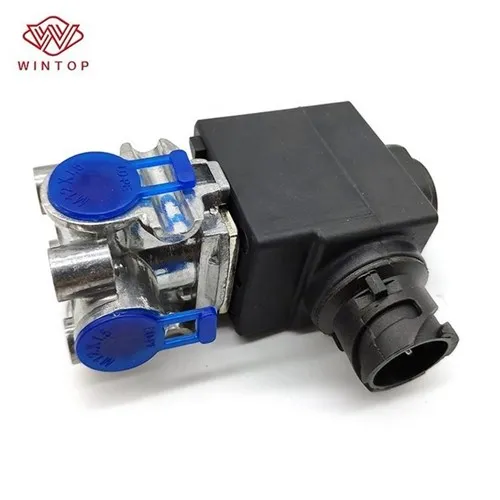
A solenoid valve is an electromechanically operated valve. Solenoid valves differ in the characteristics of the electric current they use, the strength of the magnetic field they generate, the mechanism they use to regulate the fluid, and the type and characteristics of fluid they control.
Plugged External Leakage and Controllable Internal Leakage Provide Safer Operation
Internal and external leakage can threaten the safety of your fluid or gas processing lines and the medium that flows through them. Other self-regulating valves often have stem valves that extend away from the equipment, making a potential point of damage. But solenoid valves have a rotating core controlled by electric, pneumatic, or hydraulic actuators, intended to solve the external leakage problem of valve stem dynamic sealing. Only solenoid valves use electromagnetic force to affect the steel core sealing in the magnet-isolation sleeve, and there's no dynamic sealing, so it's easy to block external leakage. It's not easy to control the torque of the solenoid valve, so internal leakage is prone to happen — even the head of the valve stem can be pulled off. The solenoid valve's structural form makes it easy to control and reduce internal leakage. Solenoid valves are exceptionally safe, and they're suitable for mediums that are corrosive, toxic, and of high or low temperature.
Lightweight Responsiveness & Energy-Saving Performance
Solenoid valves have response times as short as several milliseconds. Even the pilot solenoid valve can reach a response time in the tens of milliseconds. Due to self-looping, they're more sensitive than other self-control valves, and the coil power consumption of a well-designed solenoid valve is very low. These energy-saving products can also be configured so that only one needs to trigger an action, and the valve positions are automatically kept. Plus, solenoid valves are small and lightweight, making them easy to install and maintain.
Simple Operation with Easy Network Connectivity
The solenoid valve's simple structure is easy to install and maintain compared to other types of actuators such as sanitary regulating valves. What is more significant is that the composition of the automatic control system is much simpler and more cost-effective. As electro-mechanic switch signals control the solenoid valve, it's very convenient to connect it to computers. In today's world, where computer automation is widespread, the advantages of solenoid valves are even more apparent.
-
 Add to Inquiry
 -
 Add to Inquiry
 -
 Add to Inquiry
 -
 Add to Inquiry
 -
 Add to Inquiry
 -
 Add to Inquiry
 -
 Add to Inquiry
Why Choose us
Products Quality
We have the reliable cooperation factories, and our factory is ISO9000/TS16949 quality management system certified.
Good Reputation
We have a good reputation with high quality, reasonable price and great service in the world.
Sales Network
Our range of products and services is continuously expanding to ensure compliance with customers' requirements.
Complete Product Range
We offer over 5,000 kinds of products, including chassis parts, suspension parts, Filters, Brakes, Pumps, cooling system, air condition system, alternator
Step-by-Step Guide to Connecting a Solenoid Valve
Prepare the Valve and Piping System
How to connect solenoid valve, Before connecting the valve to your system, it's important to make sure that everything is properly prepared. This includes ensuring that all connections are compatible and checking for any obstructions or debris that could impede the flow of fluid or air.
Identify the Ports and their Functions
Once the valve and piping system are ready, it's time to identify the ports. As mentioned previously, most valves have three ports – two for intake and one for exhaust. Make sure that all of these connections are properly labeled so that they can be easily identified during the connecting process.
Establish the Inlet and Outlet Connections
Now that all of the ports have been identified, it's time to establish the inlet and outlet connections. Connect one port to the system's fluid or air supply while connecting the other two ports to the exhaust. Make sure that all of these connections are securely fastened to ensure a tight seal.
Address the Exhaust Port
The last step is to address the exhaust port. This port should be connected to a vent, drain, or other suitable location in order to ensure that any excess fluid or air is safely discharged. Once all of the connections are secure and everything is properly labelled, the solenoid valve should be ready for use!
Electrical Connections
Finally, it's important to make sure that the valve is properly wired for electrical connections. Depending on the type of solenoid valve being used, this may involve connecting the coil to either a DC power source or an AC power source. Make sure to consult the manufacturer's instructions in order to ensure proper and safe operation.
Test and Inspect
Once everything is wired and properly connected, it's time to test the valve. Turn on the power source and apply pressure to the system in order to ensure that the valve is operating correctly. Also check for any leaks or obstructions that could impede its performance.
Best Practices for Solenoid Valve Connection
Always Read the Instructions
Before attempting any type of installation or connection, make sure to read the manufacturer's instructions thoroughly. This will provide important information on the type of power source, connections, and other details that are necessary for proper operation.
Use Appropriate Connections
Be sure to use the appropriate connections when installing your solenoid valve. The wrong connection can lead to leaks or even damage to your system, so make sure to consult the manufacturer's instructions when in doubt.
Connect Properly
When connecting the valve to your system, make sure that all connections are properly fastened and sealed. This will help ensure proper operation and prevent any leaks or obstructions that could impede performance. Be sure to double-check all connections before turning on the power source.
Inspect Regularly
Finally, it's important to inspect your solenoid valve regularly in order to ensure that it is operating properly and safely. This includes checking for any leaks or obstructions that could impede its performance. Making sure to perform regular maintenance on the valve will help extend its life and ensure optimal operation.
What Are The Types Of A Solenoid Valve
Pilot operated valve
In this type a pilot control is used, so the size of the solenoid can be kept minimum and because of this the power consumption is decreased, this will also reduce the heat generation. In pilot operated solenoid valve, the electrical signal is applied to the solenoid, this would actuate the pilot valve and the pilot actuates the main valve. Pilot operated valves can be piston or diaphragm type and to keep the valve closed it needs differential pressure. These valves have quick response time and they are not costlier.
Direct-acting solenoid valve
In a direct-acting solenoid valve, a plunger will open and close the valve. These valves have low flow rates and high differential pressure drops. The direct operated type has a quicker response than a pilot operated type.
Two-way solenoid valves
In two way solenoid valves it has one inlet and one outlet pipe connection. They are either closed construction valve, so they would be closed when de-energized and opens when energized or it could be normally open construction valve, so it would close when energized and open's when de-energize.
Three-way solenoid valves
In this type of solenoid valve, it has three pipe connections and two orifices, so if one is open the other one is closed. These valves have three modes of operation the first one is normally closed construction in this type the pressure port is closed and the exhaust port is connected to the cylinder port with the valve energized, the pressure port is connected to the cylinder port and the exhaust port is closed.
In normally open construction if the valve is de-energized then the pressure port is connected to the cylinder port and the exhaust port is closed. The pressure port is closed if the valve is energized and the cylinder port is connected to the exhaust port. The next type is universal construction and this would allow the valve to be connected in either normally closed or normally open position.
Four-way solenoid valves
These valves are mostly used to operate double-acting cylinders. These valves have four or five pipe connections one pressure, two-cylinder, and one or two exhausts. In one valve position, the pressure is connected to one single port and the other is connected to the exhaust. In other valve position pressure and exhaust are reversed at the cylinder connection.

What media will the solenoid valve manage?
Your system's pressurized fluid, whether gas or liquid, is another component to consider when determining the right valve for your application. Secondly, determine the expected minimum & maximum system pressure. It's essential to find a valve design composition that will perform over an expected cycle life.
The media's chemical properties and temperature will dictate the valve's compatibility. Incompatible valve materials will react to the media, degrade and fail prematurely. Degradation can be gradual, reducing cycle life, and requiring increased preventative maintenance or unexpected repairs.
Will there be more than one media for the application? Consider things like cleaning/flushing fluids, or the possibility of poor or water-ladened compressed air. Always plan for the most challenging media.
What size solenoid valve does the application require?
Properly sizing the flow capacity of the valve is next. Many manufacturers publish a flow rating (LPM, CFM, GPM) at the valve's maximum pressure specification. Selecting an insufficiently sized valve will degrade system performance, or extend cycle times. It's crucial to select a valve that can exceed the flow rate of your application, and when a minimum system pressure may exist. Manufacturers usually provide an industry-accepted flow coefficient (Cv, Kv) that can be used to compare valve brands.
What operating conditions will the solenoid valve face?
Not all solenoid valves are used with clean dry compressed air, controlled precisely to 50 psig and within air conditioned, pristine work environments. Consider more than the most ideal conditions, and specify the valve around those parameters. This includes pressure fluctuations, quality of the media, temperature extremes and work environments.
Consider valve cycle rates and energized times to be expected of the valve, as performance and life of some brands can be affected.
Application of Solenoid Valve
Pneumatic and Hydraulic Circuits
Solenoid valves are used to stop or allow supply of air or liquid (usually oil or refrigerant) along a circuit. Common applications under this category are refrigeration, air compression and lubrication systems. An example of a refrigerant circuit can be seen below.


Automation
Solenoid valves are used whenever fluid flow must be controlled automatically, such as in robotics or factory automation. These solenoid valves are controlled by microcontrollers or programmable logic circuits with a coded set of actions. This control of fluid flow allows a defined sequence of actions to be executed precisely and accurately by a robot.
Industrial and Manufacturing Plant Valve Actuators
For fluids that cannot be handled by solenoid valves, pneumatic, hydraulic and motor actuators are commonly used. However, due to the ease of control using solenoids, solenoid valves are integrated into pneumatic and hydraulic valves actuators. Control valves in industrial plants are usually actuated by a compressed air system controlled by solenoid valves.


Medical, Pharmaceutical and Food Manufacturing
Common uses of solenoid valves in medical equipment are custom valves for dialysis machines, anesthesia machines and ventilator systems. Pharmaceuticals and food processing use solenoid valves complying with hygienic requirements.
Our Factory
RUIAN WINTOP AUTO PARTS CO., LTD is the most professional & reliable supplier in truck spare parts for VOLVO, MAN, SCANIA, MERCEDES BENZ, DAF, RENAULT, IVECO etc. We offer over 5,000 kinds of products, including chassis parts, suspension parts, Filters, Brakes, Pumps, cooling system, air condition system, alternator & starter system, ignition system, exhaust system and body parts for heavy-duty trucks and trailers.
We have a good reputation with high quality, reasonable price and great service in the world. We have the reliable cooperation factories, and our factory is ISO9000/TS16949 quality management system certified.
We aspire to meet the demands of truck parts users globally. Our range of products and services is continuously expanding to ensure compliance with customers' requirements.
WINTOP welcome our potential customers for future business relationships and achieving mutual success!

Asked Questions
Q: What is the common problem of solenoid valve?
Q: How long can a solenoid valve be energized?
Q: What must you ensure when installing a solenoid valve?
Q: Does it matter which way you connect a solenoid valve?
Q: What are the two main causes of solenoid failure?
Q: What is the life expectancy of a solenoid valve?
Q: Do solenoid valves need pressure?
Q: How much power is required for solenoid valve?
Q: What happens if you install a solenoid valve backwards?
Q: Is there a positive and negative on a solenoid valve?
Q: How to troubleshoot a solenoid valve?
Check that system pressure is above minimum operating requirement.
If ok then clean or replace diaphragm, check bleed galleries.
If ok then check armature air gap.
Q: Can a solenoid valve be partially open?
Q: How to solve solenoid problem?
Q: Why won't my solenoid valve close?
Q: What happens when solenoid valve goes bad?
Q: How do I know what solenoid valve I need?
Valve Actuation. ...
Valve Size and Flow Capacity. ...
Pressure and Temperature Ratings. ...
Electrical Compatibility. ...
Safety Considerations.
Q: Does wattage matter in a solenoid valve?
Q: How many amps is a solenoid valve?
Q: Which of the following must you ensure when installing a solenoid valve?
Q: What is the common problem of solenoid valve?
As one of the leading solenoid valve manufacturers in China, we warmly welcome you to buy or wholesale cheap solenoid valve in stock here from our factory. All products made in China are with high quality and competitive price.
